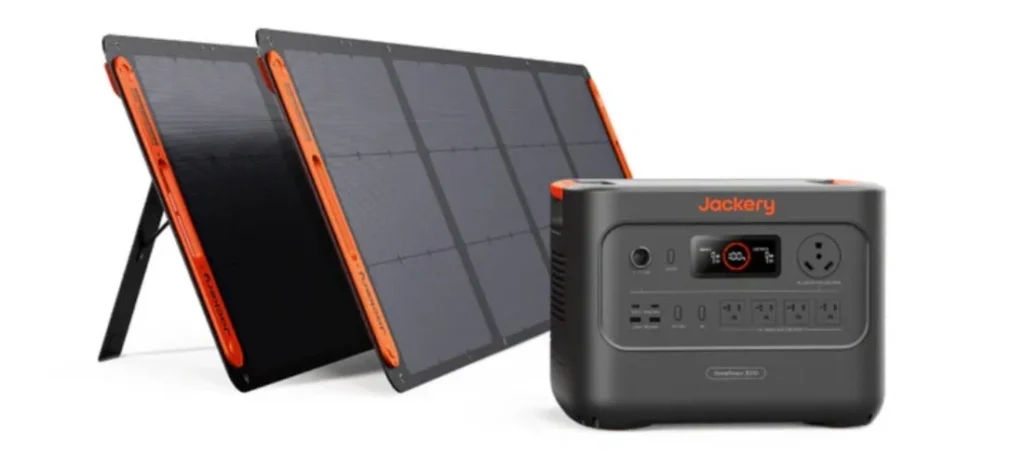
Jackery is the brand most people picture when they hear “portable power station”: the orange-and-gray box that runs a campsite’s lights, keeps a fridge cold through a blackout, or powers a laptop on a long road trip without a gas generator’s noise and fumes. The range now runs from a 99Wh unit small enough for carry-on bags to expandable home backup systems that connect to a transfer switch.
It’s rarely the cheapest option per watt-hour at full price. What you get instead is a polished, reliable product, long-life LiFePO4 batteries, frequent sales and a warranty that stretches to five years when you buy direct. For most buyers, that’s the safer bet.

Jackery prices by model
Prices on jackery.com on October 24, 2026. Most models were on sale, so the regular price is shown for comparison.
| Model | Capacity | Output | Sale price | Regular |
|---|---|---|---|---|
| Explorer 100 Plus | 99Wh | 128W | $149 | n/a |
| Explorer 300D | n/a | n/a | $209 | $249 |
| Explorer 600 v2 | 640Wh | 500W | $499 | n/a |
| HomePower 1000 v2 | 1,024Wh | 1,500W | $549 | $699 |
| HomePower 1000 Plus v2 | 1,024Wh, expandable | 1,800W | $679 | $759 |
| Explorer 2000 v2 | 2kWh class | n/a | $899 | $999 |
| Explorer 1500 Ultra | 1,536Wh, IP65 | n/a | $1,079 | $1,199 |
| HomePower 2000 Plus v2 | 2,048Wh, expands to 12kWh | 2,400W | $1,549 (4kWh bundle) | $1,889 |
| HomePower 3600 Pro Max | 3.6kWh, 120V/240V | 2kW at 120V | $1,799 | $2,099 |
| Explorer 5000 Plus | 5,040Wh, 120V/240V | 7,200W | $4,639 | $5,159 |
Solar Generator bundles pair a station with SolarSaga panels. For example, the HomePower 1000 v2 solar bundle was $749. Refurbished units are also sold, such as the Explorer 100 Plus for $129.
Which size do you actually need?
Work out what you’ll run and for how long. A rough guide, before efficiency losses of 10% to 20%:
- Phones, cameras and a laptop for a weekend: the Explorer 100 Plus or a 300-class unit.
- Camping with lights, a fan, a CPAP and a 12V cooler: 600 to 1,000Wh.
- A home fridge and Wi-Fi router through a short outage: 1,000 to 2,000Wh. A typical fridge cycles on and off, so a 1kWh unit can often keep one going for several hours. Check your fridge’s label for its running and startup watts.
- Several circuits through longer outages: expandable HomePower 2000 Plus v2 or 3600 Pro Max, ideally with solar.
The HomePower models also switch over in under 10 milliseconds when grid power drops, so they can act as a UPS for a desktop PC or network gear.
Batteries, charging and warranty
Current Jackery models use LiFePO4 (LFP) cells, which last far longer than older lithium-ion packs. The Explorer 100 Plus is rated for 2,000 cycles to 80% capacity, and the HomePower 3600 Pro Max for 6,000 cycles. The 600 v2 recharges from AC and solar together in about 70 minutes, according to Jackery.
The warranty is the strongest reason to buy direct. Jackery advertises up to five years on many models “only at jackery.com,” combining a standard warranty with an extension for direct buyers. Owners note that keeping cell coverage valid can require periodic charging, so read the terms and charge stored units every few months anyway.
Jackery’s after-sales policy gives a 30-day return window from delivery on orders from its website, with a prepaid return label once support issues an RMA number. Cancellations must be for the whole order and requested quickly.
Flying, safety and outages
Only the smallest unit travels by air. The FAA’s lithium battery rules allow lithium-ion batteries up to 100Wh in carry-on bags, which is exactly why the Explorer 100 Plus is rated at 99Wh. Anything bigger stays on the ground.
At home, the big safety advantage over a gas generator is indoor use. FEMA’s Ready.gov outage guidance says fuel generators must be used only outdoors and away from windows because of carbon monoxide. A battery station has no exhaust, so it can sit next to the fridge or a medical device. Jackery also sells Red Cross Edition models, including the HomePower 1000 Plus v2 at $749.
What owners complain about
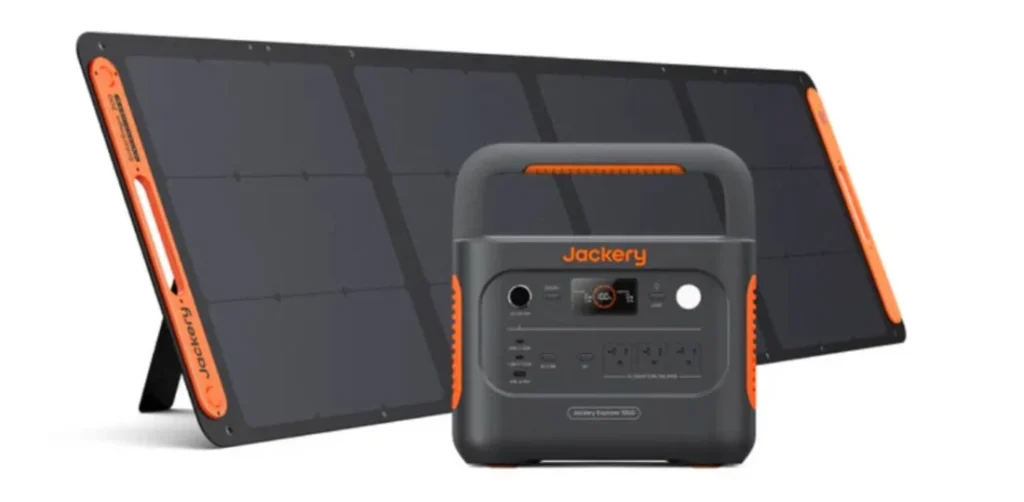
Jackery gets consistent praise for reliability, simple controls, quiet operation and build quality. TechRadar has named the Explorer 1000 v2 a top pick for power outage prep. The complaints are worth knowing:
- Customer service experiences are mixed. Owners on the Jackery subreddit describe both quick replacements and slow, automated replies during warranty claims.
- App issues, including connectivity and control bugs on some models.
- Fan noise under heavy load or while fast charging, reported on some larger units.
- Full prices that run above rivals. Jackery’s sales are frequent enough that paying full price rarely makes sense.
Jackery vs EcoFlow, Anker SOLIX and Bluetti
EcoFlow is the closest rival, often with faster charging and more app features. It tends to appeal to tech-minded buyers.
Anker SOLIX competes hard on price and has strong mid-size LFP models backed by Anker’s broad support network.
Bluetti is popular with off-grid and RV users for its expandable systems and high solar input.
Jackery’s edge is simplicity, a strong reliability reputation and the direct-purchase warranty. Compare current sale prices for the capacity you need, since all four discount often.
For more gear, browse our electronics reviews and tech section, including Tenways e-bikes. If you’re powering tools away from an outlet, see YESWELDER, and for planning the road trip itself, our KAYAK review.
Who should skip Jackery
Skip it if you want the lowest possible price per watt-hour, if you need whole-home backup with automatic transfer and don’t plan to pay for an electrician, or if you prefer a gas generator’s unlimited runtime. The pros and cons are summarized below.
Our verdict on Jackery
Jackery makes reliable, easy power stations that suit campers, RV owners and anyone preparing for outages. Buy direct during a sale to get the five-year warranty, size the unit to what you’ll really run, and add solar if outages last more than a day where you live. It’s one of the safest picks in the category.
Our review method explains how we research products from published specs, prices and owner feedback.