Almost every cloud storage company wants a monthly payment forever. pCloud, a Swiss company that has been running since 2013, still lets you pay once instead. Its lifetime plans cost $219 for 500 GB, $499 for 2 TB and $1,499 for 10 TB, and for people who keep files for years that changes the math completely.
The apps are good too. pCloud runs on Windows, macOS, Linux, iOS, Android and the web, mounts your storage as a virtual drive so it doesn’t fill your laptop, and keeps earlier versions of your files. Encryption on your own device is available, though it costs extra. For most people who want long-term storage and backup rather than a full office suite, pCloud is one of the best buys in the category.
pCloud prices (checked October 24, 2026)
| Plan | Monthly | Yearly | Lifetime (one payment) | Shared-link traffic per month |
|---|---|---|---|---|
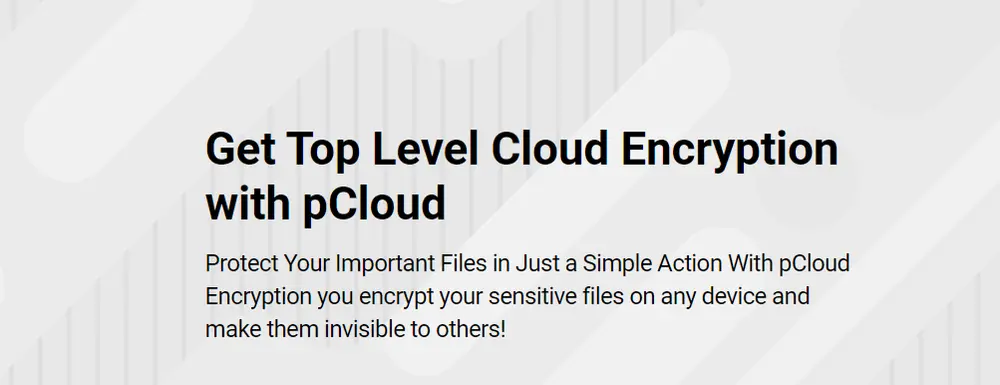
| Premium 500 GB | $4.99 | $49.99 | $219 | 1 TB |
| Premium Plus 2 TB | $9.99 | $99.99 | $499 | 4 TB |
| Ultra 10 TB | $29.99 | $299.99 | $1,499 | 20 TB |
| pCloud Encryption add-on | $4.99 | $49.99 | $150 | n/a |
pCloud’s pricing page shows the lifetime plans next to crossed-out prices of $279, $709 and $2,799. In practice, $219, $499 and $1,499 are what pCloud normally charges, so don’t feel rushed by the “discount.” Seasonal sales sometimes go deeper or bundle Encryption for free; a Moon Festival offer in early October 2026 included lifetime Encryption with the 2 TB and 10 TB plans.
Every paid plan includes file history, password-protected links, the new pCloud Photos and pCloud Docs apps, and a 14-day refund window. The free account starts with a smaller allowance and can grow to 10 GB by completing setup steps and inviting friends.
Does a lifetime plan pay off?
Compare each lifetime price with the yearly plan:
- 500 GB: $219 once vs $49.99 a year. Break-even after about four and a half years.
- 2 TB: $499 once vs $99.99 a year. Break-even after five years.
- 10 TB: $1,499 once vs $299.99 a year. Break-even after five years.
After that, every year is free. pCloud defines “lifetime” as 99 years or the account holder’s lifetime, whichever ends first. Lifetime licenses stack, so buying 2 TB on top of an existing 500 GB plan gives you 2.5 TB.
The honest risk is the company itself. A lifetime plan is only as good as pCloud’s future, and if it ever shut down the license would go with it. More than a decade of operation and a large user base make that less of a worry, but it’s why we’d still keep a second copy of anything irreplaceable.
What you get day to day
pCloud Drive. The desktop app adds a virtual drive. Your files look local but stay in the cloud until you open them, and you can mark folders for offline use. On a laptop with a 256 GB SSD, this is the feature you’ll notice most.
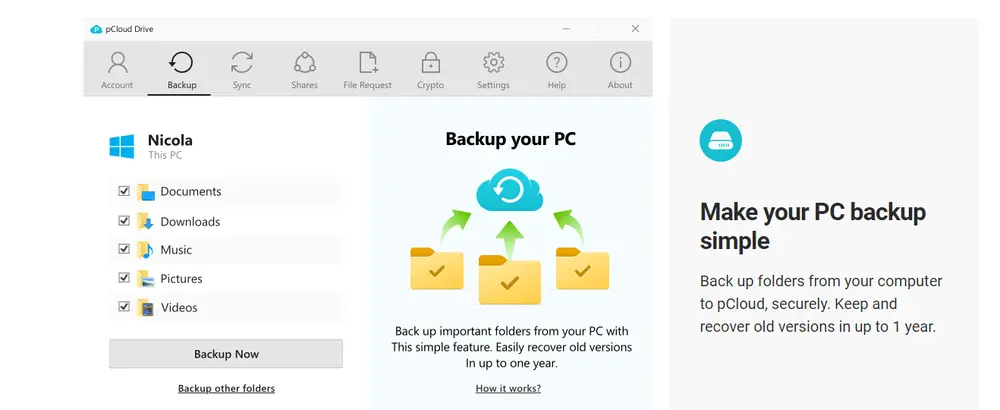
Sync and backup. Sync any folder between computers, back up desktop folders, and turn on automatic photo uploads from your phone.
File history. Restore older versions or deleted files within the retention period for your plan.
Sharing. Share by link with passwords and expiry dates, use shared folders, or send an upload link so clients can drop files into your account.
Media. pCloud plays video and audio straight from the cloud, and the newer pCloud Photos app organizes your library. It’s a strong choice for photographers and anyone with a large music or video collection.
Privacy and encryption
Files are encrypted in transit with TLS and at rest with 256-bit AES on pCloud’s servers, and the company operates under Swiss privacy law. That protects your data from outsiders, but pCloud holds the keys.
If you want files that only you can read, buy the pCloud Encryption add-on. It creates a Crypto Folder where files are encrypted on your device before upload, using a Crypto Pass that pCloud never sees. You can’t preview those files in the browser, and if you lose the Crypto Pass, pCloud can’t recover it.
One caveat for security-sensitive users: in 2024, researchers at ETH Zurich published attacks against several end-to-end encrypted cloud services, pCloud’s Crypto Folder among them. The attacks required a compromised server, which is a high bar, but if you store highly sensitive material it’s worth reading pCloud’s current security notes or choosing a service built entirely around encryption.
What owners complain about
pCloud gets good marks for its apps, lifetime value and media playback. The criticisms that come up most:
- Encryption costs extra on personal plans, while some rivals include it by default.
- No built-in office suite on the level of Google Docs or Microsoft 365, even with the new pCloud Docs editors.
- Lifetime means trust. Buyers have no guarantee beyond the company’s continued operation.
- The 14-day refund window is short for a purchase of several hundred dollars, so test right after you buy.
pCloud vs Google One, Dropbox and Sync.com
For 2 TB of storage, approximate 2026 yearly prices look like this:
| Service | 2 TB per year | Lifetime option | Client-side encryption |
|---|---|---|---|
| pCloud | $99.99 | Yes, $499 | Add-on |
| Google One | $99.99 | No | No |
| Dropbox Plus | About $119.88 | No | No |
| Sync.com Solo Basic | About $96 | No | Included |
Google One makes sense if you live in Gmail, Docs and Google Photos. Dropbox is still excellent for team sharing and sync speed. Sync.com is the pick if you want encryption on everything by default. pCloud wins if you’ll keep the storage for five years or more, or if you want Linux support and media streaming in one place.
Planning to back up a VPN-protected laptop? Our Surfshark review covers that side of privacy. If you edit video, our Movavi review and Insta360 review pair well with plenty of cloud space, and for PDFs our Foxit PDF Editor review is worth a look. Website owners who need hosting backups should see our Kinsta review. More software and gadgets are in our tech reviews.
Who should skip pCloud
Skip pCloud if you mainly need real-time document collaboration with a team, if you want end-to-end encryption on every file without paying extra, or if you won’t use the storage for at least a few years. In those cases Google One, Dropbox or Sync.com may suit you better. The pros and cons are below.
Our verdict on pCloud
pCloud is one of the smartest ways to stop paying a monthly storage bill. Buy the lifetime size you’ll still need in five years, add Encryption only if you store sensitive files, wait for a seasonal sale if you can, and keep a second backup of anything you can’t lose. For media-heavy users, families and anyone tired of subscriptions, it’s an easy recommendation.
Our review method explains how we research software from published plans, documentation and user feedback.